How to Cover Eczema With Makeup & Glow Through a Flare Up
This site contains affiliate links; I may earn a small commission at no extra cost to you.
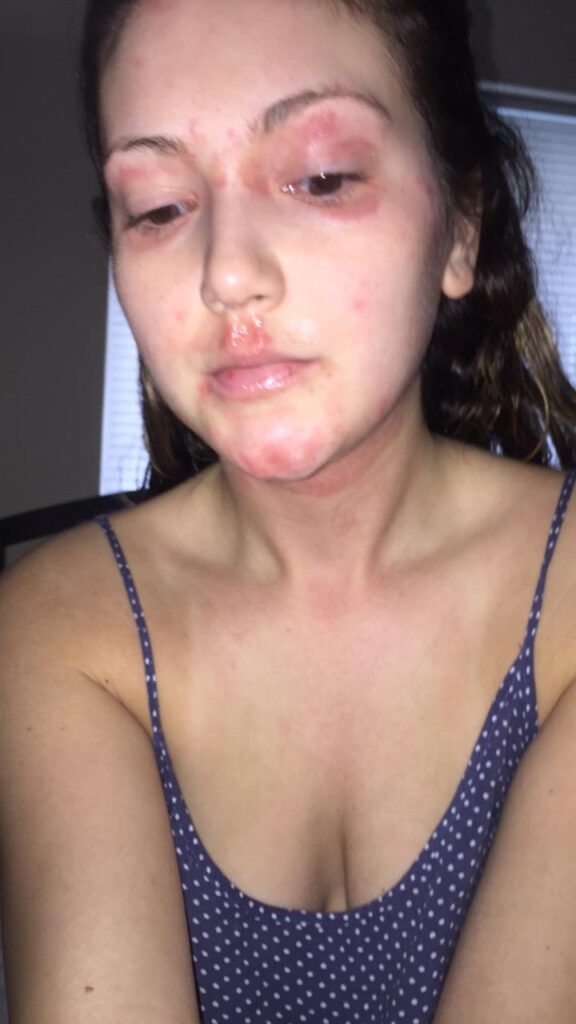
This post shows you exactly how to cover eczema with makeup.

Have you ever contemplated putting makeup on to cover the eczema patches on your face?
Well, if you suffer from severe eczema like I do, I’m going to assume the answer is yes.
Some common follow up concerns people tend to have when contemplating putting makeup over an eczema flare up are:
- how exactly do you apply the makeup over the eczema without it looking dry?
- how do you prevent the underlying skin from becoming more irritated?
- which makeup products work the best for face eczema?
As someone who has mastered the art of applying makeup to eczema, I’m here to tell you it’s 100% possible to get a flawless makeup application, even during a flare up.
I’ll be honest though, figuring all of this out was not an overnight process for me. It’s actually taken a lot of trial and error to figure out what techniques and products works best to cover facial eczema.
But, lucky for you, I’ve already put in the leg work for you!
Below, I’ve compiled all the best tips and tricks explaining exactly how to cover eczema with makeup.
understanding makeup and eczema
First and foremost, when it comes to putting makeup on eczema, it really can be a challenging endeavor.
This is especially true if you don’t have an understanding of what is happening, and what to do to combat it.
Eczema causes a disruption to your skin barrier which then leads to compromised skin.
When you go to put makeup over the compromised skin, with no prep, precaution, or technique, It’s pretty common to be left with bumpy, flaky, irritated patches.
That’s why it’s important to do your research and take steps to ensure you are combatting each of those before jumping in to applying makeup.
However, with some patience and practice, covering eczema with makeup is not as difficult as it may seem.
how to Prep eczema-affected skin Before Makeup
So here’s the deal: you can use the best of the best makeup products but they will still appear cakey and dry if you don’t do the correct prep work on your skin prior to applying makeup.
The first, and arguably most crucial step to any makeup routine, regardless of if you suffer from eczema or not, is to begin with a clean, hydrated face.
A few makeup prep steps I do differently as an eczema sufferer though before applying makeup are as follows:
- Thoroughly (chemically or physically) exfoliate any and all dry patches.
- After washing your face, pat it dry and immediately begin massaging in a natural oil like Rose Hip Seed Oil.
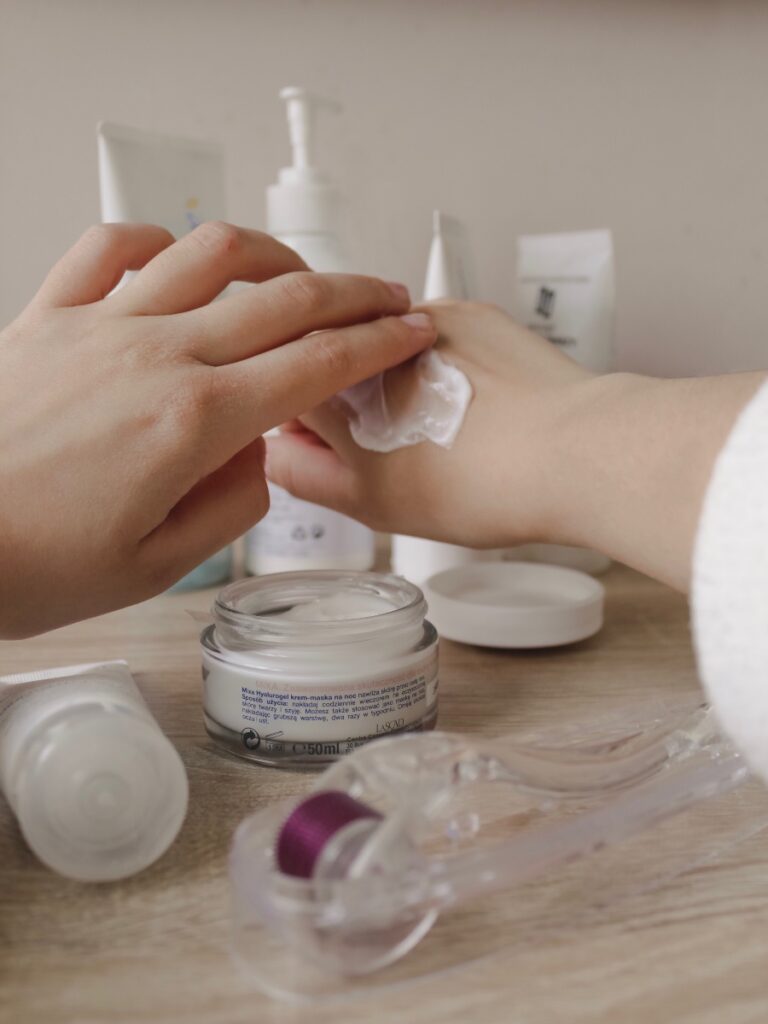
- Instead of using a face moisturizer, apply a good face cream. They are much thicker and way more moisturizing.
- Follow up with a balm or ointment like this one on top to seal in the previous layers of moisture.
- Be sure to wait a few minutes between each step and before beginning makeup application to allow for maximum skin absorption.
PROFESSIONAL HACK: If you’re on a time crunch and don’t have time to go through your whole exfoliating, cleansing, and moisturizing routine: massage this cleansing balm into your skin, let it sit for 5 minutes, and then gently wipe away the excess prior to makeup application.
how to cover eczema with makeup – step by step
Let’s get into the nitty gritty of how to apply makeup to red makeup rashes on your face, after you have completed your skin prep.
This entails building layers to cover the redness and even out the skin tone.
Before you get started, make sure to do yourself a favor and grab a Beauty Blender.
It’s the only tool I recommend for applying makeup directly to eczema.
I swear by this Beauty Blender.
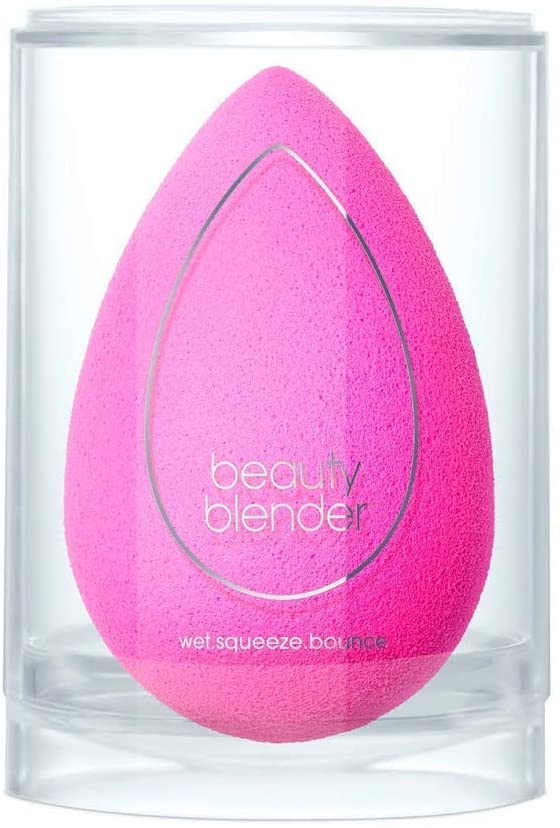
If you’ve never used one before, it’s a game changer. You just squeeze them under running water from your sink and squeeze out any excess water.
You’re then left with a damp sponge to blot and blend your makeup with.
Applying makeup with this sponge provides much-needed moisture to skin affected by eczema and gives a perfectly blended, air-brushed look.
Step #1: Apply Green Concealer to eczema patches
Sometimes, when your skin is super red and inflamed, you may need a little extra coverage, aka concealer.
And not just any concealer.
Save yourself some time and energy by using a green concealer on your problem areas prior to foundation application.
This way, you don’t have to pile on layers of foundation.
Since the color green is the opposite of red on a color wheel, the green pigment naturally cancels out and neutralizes redness.
The Physicians Formula Conceal RX Physicians Strength Concealer in Soft Green was my absolute go-to during my really bad periods of eczema.
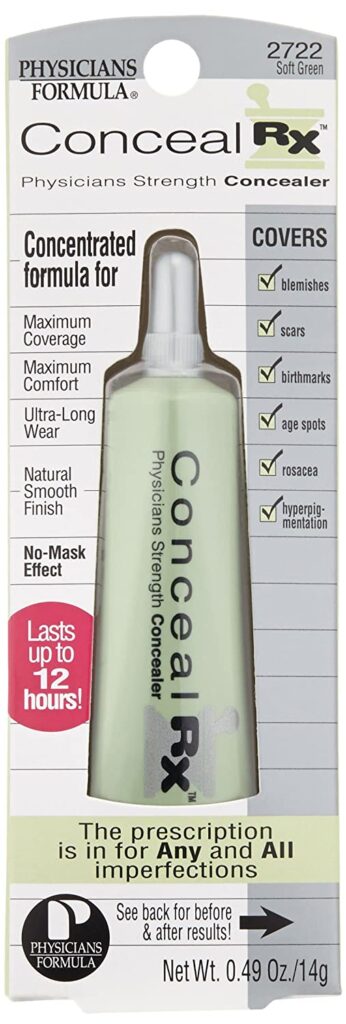
Trust me, it will cover ANY AND ALL redness.
The key is to apply it lightly with your fingertip and blend it out well with a moist Beauty Blender sponge.
Just remember a little bit goes a long way!
2. Step #2: apply Regular Concealer
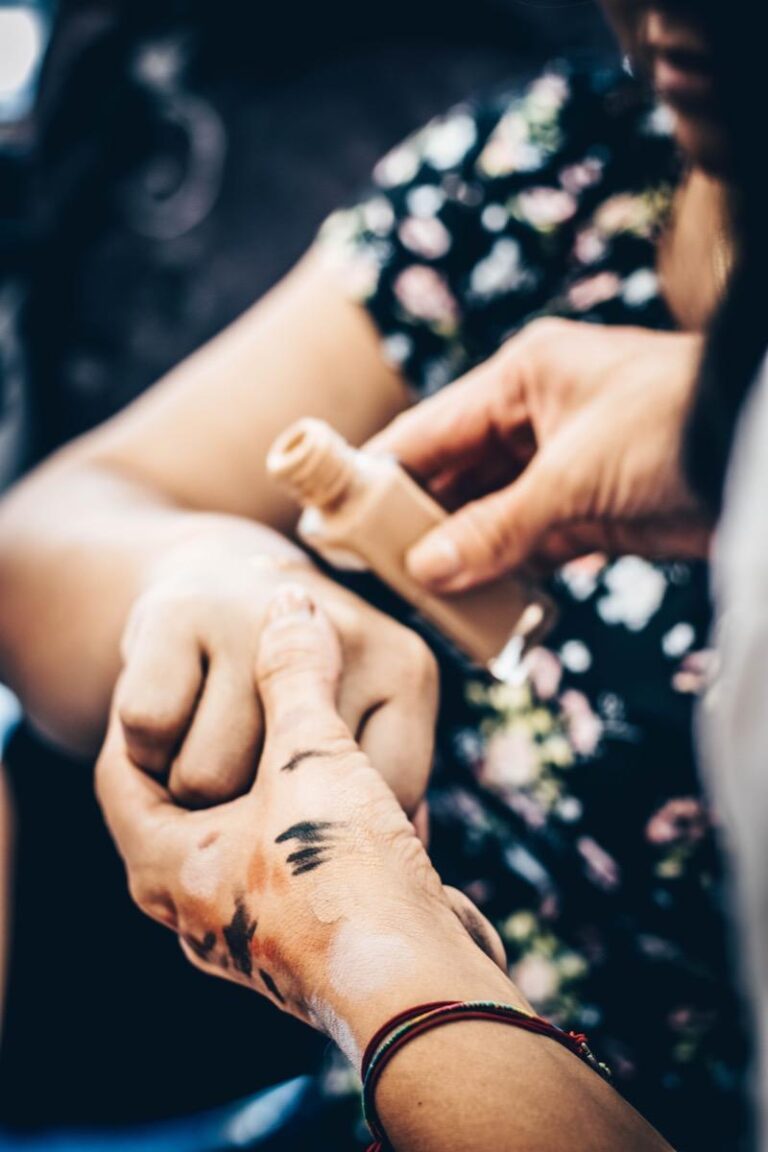
After you have allowed that to set into your skin for a minute or 2, apply a nude color creamy concealer with your beauty blender.
After this, go ahead and lightly spritz your face with moisturizing spray before the next step.
3. Step #3: Apply Foundation
The next step is to put on your overall foundation.
When applying the foundation (or BB/CC cream/tinted moisturizer), don’t apply the product directly on your most flared up areas.
For example, I tend to have the most eczema on the most inner parts of my face (around my eyes and above my mouth).
So, when I apply the base, I put it on my outer cheeks and around the perimeter of my face and blend it inward from there. This way I’m not concentrating the makeup in the dry areas (i.e. flaky buildup), and I’m lessening the chance of irritation and flakiness.
The thinner the layers of makeup over your problem areas, the better.
As with all layers before this, dab your makeup sponge in a quick, light, blotting/tapping motion.
Do not blend in circles with a brush, as this will lift up any existing dry skin flakes and make them more noticeable.
Click on the link to go to my absolute best foundations for eczema!
STEP #4: Finishing Spray
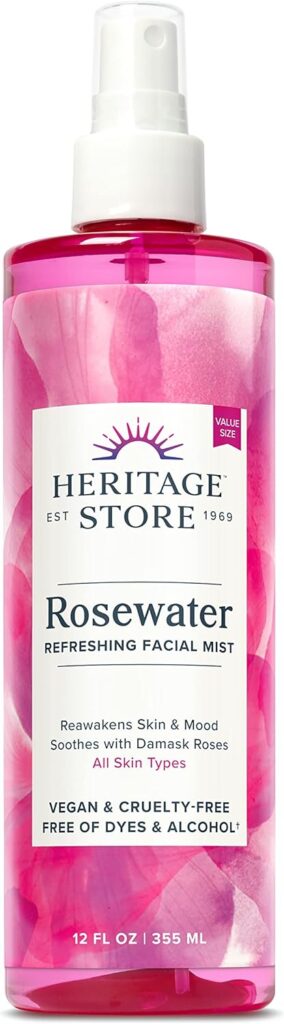
Lastly, finish with a hydrating facial mist/setting spray.
I use it before, during, and after applying makeup, and as a refresher while I’m out and about if my skin starts to feel dry.
My go-to for quite some time has been the Heritage Store Rosewater Facial Mist.
What about the setting powder you ask?
One of the perks of having dry skin is that setting powder isn’t always a must.
In fact, I actually recommend skipping face powder on eczema.
If you do use powder, you run the risk of it building up on dry patches.
other tips for covering ECZEMA WITH MAKEUP
Here are some additional things to keep in mind when applying makeup to eczema.
minimal makeup application is best
If you are anything like me, on days when your skin is really flaring up, the last thing you want to do is put on a full face of makeup.
Not only because it could intensify your flare, but because without proper prep work, your makeup will look and feel as though it is caked on.
While it depends on the severity of your dry skin or flare-up, and what you have going on that day, your best bet is to adopt a minimalist makeup routine on your very worst of skin days.
Basically, try to go with a lighter, natural makeup look to enhance your features and tone down the appearance of any irritation.
On these days, stick with your tried and true, time-tested products and keep things simple.
When your skin is at its worst and you don’t want to cover your entire face with makeup, stick with these essential makeup products.
A good minimalist makeup routine during an eczema flare up might include:
- Mascara
- Dewy Finish Foundation or Tinted Moisturizer
- Cream Bronzer

Opt for Cream Products to cover eczema
For makeup products like bronzer and blush, try using them in cream form.
They blend easily with your base makeup are perfect for applying to super dry skin because you don’t risk them causing flakes.
Final Thoughts
Remember, as annoying as eczema flare ups are, there’s nothing saying you have no control in combatting it and still feeling confident in your appearance!
Waking up to an eczema flare up is the worst, but so is thinking there’s nothing you can do to manage the appearance of your inflamed skin.
Eczema should not prevent you from applying makeup to enhance your appearance.
Hopefully this inspires you to not let a skin condition hold you back from living your best life and feeling like the most beautiful version of yourself.
That can mean with or without makeup!
If you, too, suffer from eczema on your face, I’d love to know how you put makeup on eczema as well as some of your go-to makeup products.
Please share them in the comments and let me know if this post on how to cover eczema with makeup was helpful!
You might also like: HOW TO PREVENT WINTER ECZEMA – 10 TIPS TO HALT A FLARE UP


Hi Jessi,
When you mention balm in your routine, which do you use?
Thanks!
Amanda
I love the Barrier Balm by Theraplex!
Thank you for this post. I suffer from getting dry, flaky, patches above my eyes. Would this routine help with containing moisture? I usually avoid foundation & powder, but maybe I’m just not using the right products? I already know I don’t know how to apply them correctly yet. Haha
Hi Erika! Flaky patches above eyes are the worst! I would avoid eyeshadow but as far as foundation goes- yes, absolutely! Just be sure to layer up (i.e. exfoliate, use thick cream moisturizer, barrier balm, primer, and then foundation and allow time to set between layers)…let me know if this works for you!
I am recently diagnosed with eczema and this is so helpful. Thank you!
Hi Kay! I’m so glad you found this helpful and I hope you are on your way to quick eczema healing! <3
super thoughtful and helful for a first-timer who struggles with repeated flare ups
I am so happy to hear this! Glad it was helpful for you xx