
How to Grow Your Blog: 9 Tips to Move the Growth Needle
This site contains affiliate links; I may earn a small commission at no extra cost to you.
This post is all about how to grow your blog in 2026.
It’s no secret that growing a blog from the ground up takes time.
In fact, 73% of bloggers give up within the first year of launching their website, according to Medium.
So, why is this?
Well, for starters, unlike a lot of other social media platforms like Instagram and TikTok, growing a blog website doesn’t typically provide any instant gratification or overnight growth.
Realistically, it actually takes a a good chunk of time blogging consistently before you will start to harvest consistent blogging income.
Nevertheless, so many new bloggers give up when the going gets hard, instead of sticking with it and nurturing their website.
In fact, there is so much that goes into setting up a blog, that it can take up to a year or two before you know the basics of SEO, feel comfortable with website setup and themes, know all of your legal obligations, and can keep up with your website maintenance, etc.
I started by blog in 2021, and I am still learning new things everyday about blogging.
What is Blog Growth?
There are a few different metrics to use to measure blog growth.
The first and most important is traffic.
The most reliable tool to measure your blog traffic is Google Analytics, as this will give you the details of all the visits to your blog from all traffic sources including social media, search engines, direct visits, etc.
Another way to measure blog growth would be from income.
High traffic or an increase in blog traffic doesn’t always (but most of the time does and should) equate to blog success.
Sometimes though, income is the best indicator of how your blog is growing, and this is measured and determined through all your sources of revenue such as ad income, affiliate income, sale of products, and brand sponsorships.
What Does Typical Blog Growth Look Like & What Determines It?
Taking into account the above, it shouldn’t be a surprise that blog growth is often not a linear upward growth pattern.
It’s actually very common to have ups and downs, and experience substantial traffic and revenue growth, followed by a period of…well, not so much.
There are so many factors that can determine what your blog growth will looks like, but the major one is…
drumroll…
Life.
Yep, that’s right. Life happens, and it’s easy, especially in the beginning stages, to take a hiatus from your blogging plan, when/if you are not seeing much output from your input.
Or life throws you a curveball and you don’t have the mental of physical capacity to keep up with your blog, which will, in turn lead to a drop in blog growth.
Another factor that affects your blog growth is the nature of seasonal content.
You can see major growth during a certain season if you have a post that goes viral during said season, and then experience significant decline once that season passes.
It’s important to keep in mind that your progress will most likely not be linear, and when do you experience a decline, that doesn’t mean it’s time to throw in the towel.
How Long Does Blog Growth Take?
If you are implementing blogging best practices from the very start, without any setbacks or hiatus’s, it may only take a year or two of consistent blogging to see tangible blog growth.
It took me a while [and by a while, I mean like 4 years a while :)] to fully grasp the correlation of what I get out of my blog isn’t only determined by what I put in, but by consistency over time.
That’s right…
It might seem like a crazy obvious revelation that the equation for blogging success is:
Consistency/time + Quality Niche content = Blogging Success
Trusting the process isn’t always easy, but it’s detrimental in the growth of your blog.
How to Grow Your Blog
Let’s get into the nitty gritty details of what I recently started implementing, that has caused me to see the most growth in my blog.
1. Do more of what’s working
This might seem like an obvious tip, but I think a lot of people don’t stop to really analyze what’s working and what’s not.
This means really digging into your analytics, finding what brings you the most traffic, and doing more of that.
If you’re going to take your blog serious and treat it like a business, the harsh truth is that you shouldn’t just be writing about what you want to write about. You should instead write to serve your audience and that means figuring out what people want you to write about.
So stick to what’s working and don’t do any side quests until you are in a spot where you can start branching out and broadening your niche.
2. Use Pinterest Trends & Pinterest Predicts
Pinterest Predicts is such a useful tool when it comes to helping you with keyword research and future blog topic ideas.
If you aren’t using it to help you with potential blog topics, you’re missing out on so much intel.
To access Pinterest Trends, just click on your Pinterest Business Hub button in the top left corner of your Pinterest Home Page -> Pinterest Trends.
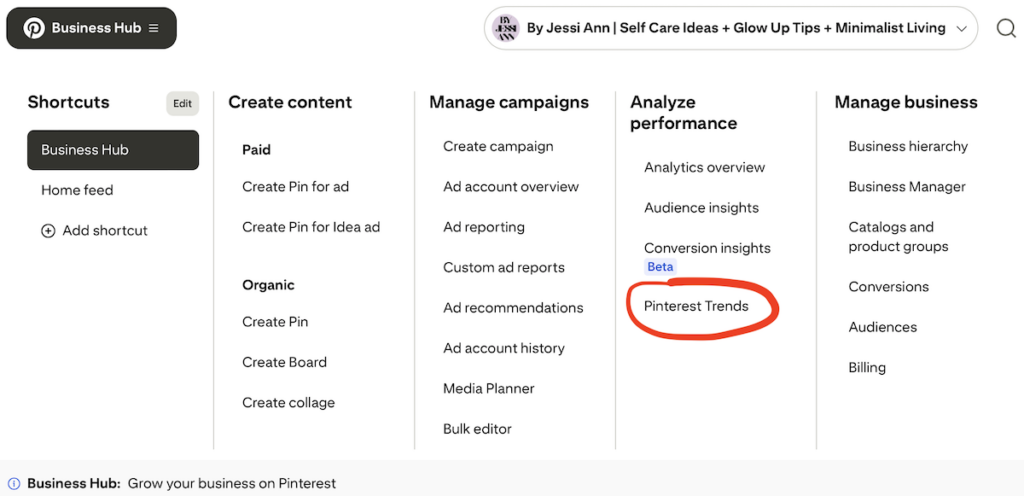
Then scroll down and you will see this:
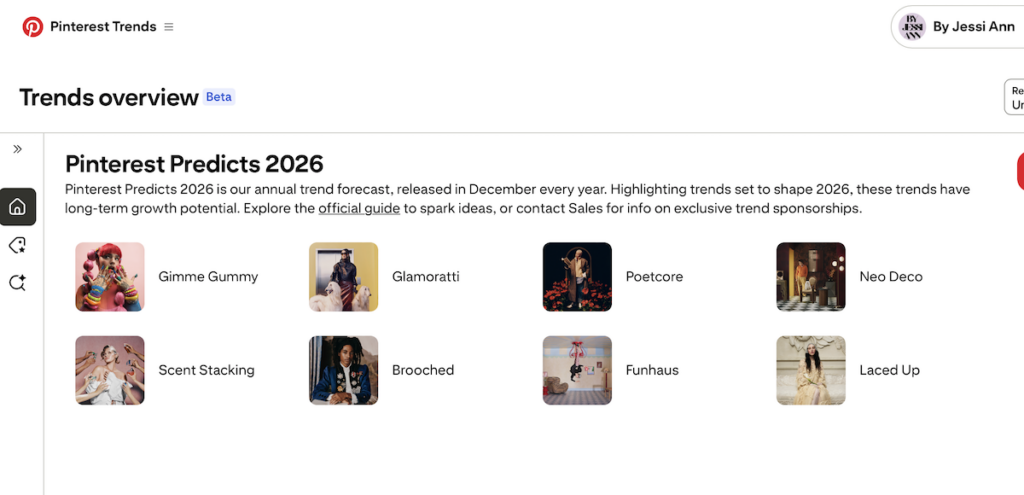
3. Use Pinterest keyword email suggestions
Pinterest has been sending out emails with keyword and board ideas, and this is such a good hack for finding trending keywords to use in your pins.
I have a folder in my email that I keep with recent keywords included in the emails Pinterest sends me.
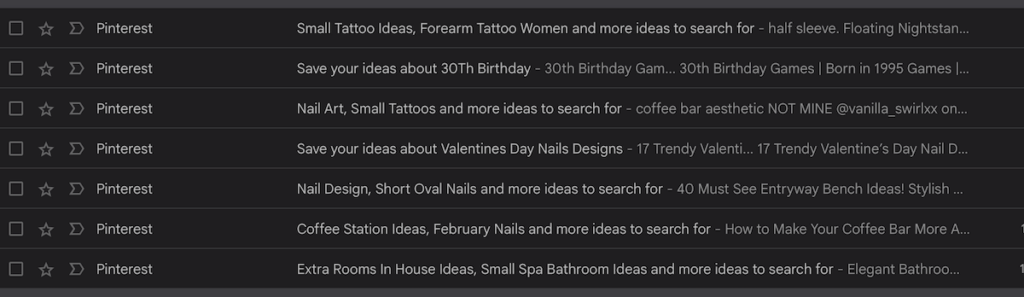
Make sure you opt in for these in your Pinterest settings under “Notifications.”
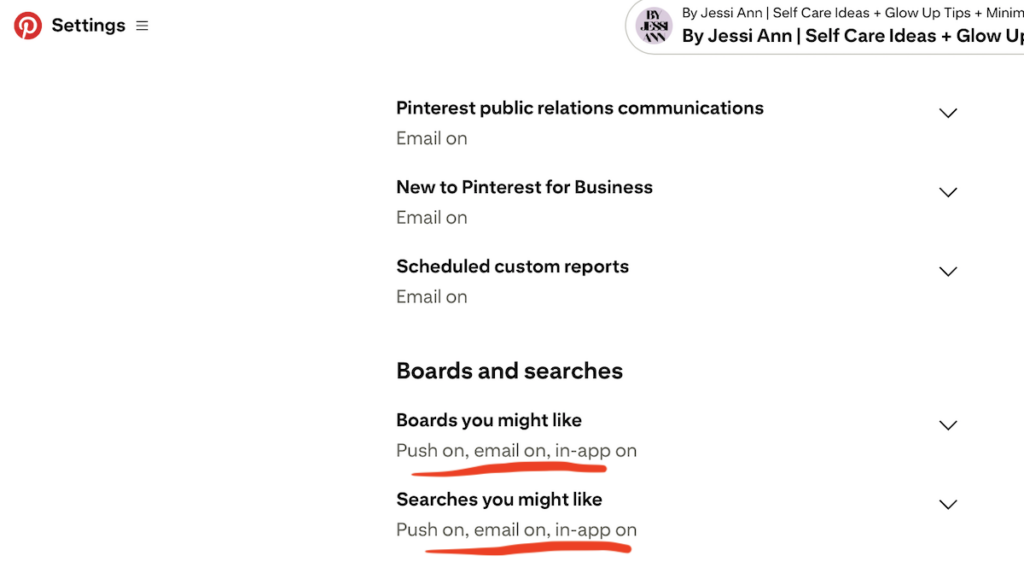
4. Pin 4-6 high quality pins per day to grow your blog
It’s not always better to pin more.
Right now, I would even argue that 4-6 pins per day is preferred.
With those pins though, make sure they are high quality pins that are similar to other well-performing pins.
To save time, I just scroll through and find a well performing pin, duplicate it in Canvas, and make tweaks to colors, font, font sizes, and images, etc.
I replicate this every night and it takes me no more than about fifteen to twenty minutes per day!
5. Intentional manual pinning will grow your blog
I used Tailwind for a short period of time in the beginning of my blogging journey, but I knew pretty early on that it was not for me.
While some may benefit from making pins in bulk and batch pinning, it doesn’t bring out my creativity and I don’t find it to be a useful way to spend my time (I prefer taking 15-20 minutes per day to make 4-6 new pins).
However, regardless of if you choose to batch-create the pins or not, I highly suggest manual pinning directly from the Pinterest platform.
Pinterest does offer a scheduler now, and it still allows you to manually pin.
When you manually pin, you are able to better target keywords, and formulate each pin title and pin description with some thought.
Which I think, in the long run, makes a world of difference in how your pin performs.
6. Use the same blog post writing process & follow a blogging schedule
In the beginning of my blogging journey, I would only write a post when I was feeling inspired.
This might be okay for a personal blog with no goal for growth or income, but if you want serious growth, you need to have a posting schedule and stick to it like it’s a job.
In order to make this more doable for me, I came up with my own blog post writing process, and it instantly became immensely easier to push out a blog post on a regular basis.
Now, when I sit down to write a blog, it is as simple as following my topic/keyword finding process, using my template, and essentially filling in the blanks with the applicable information.
I will be sharing in an upcoming post my exact Blog Post Writing Process & Blog Post Template!
Once you get the process down pat, it becomes as easy as rinse and repeat, and before you know it, you are pushing content out on a regular schedule!
7. Provide useful information to your audience to grow your blog
While visual idea posts and list posts (i.e. 20 cool tattoo ideas, 38 nail ideas), do perform well on Pinterest and bring in a lot of traffic, I don’t believe basing all your content on these types of posts is not great for a longterm growth plan.
One of the best ways to grow your blog is to actually provide good, actionable information your audience can use.
This typically means helping solve a problem, and making sure once your audience reaches your website, they get the answers they are looking for when they click on your post.
In order to do this, it’s important to do plenty of research on your topics.
I do this by:
- Writing my long articles about topics I know a lot about (topics I would consider myself an “expert” on)
- Doing good research to fill in any gaps in my knowledge
- Looking at similar articles to see what all I should be covering, and opportunities to provide more than what they did/make my article better.
Not only will this serve you well for SEO and establishing authority, but it will let your audience know they can trust you, which equates to brand loyalty in the long run.
8. Don’t overdo it with ads to grow your blog
I noticed I was getting really bad feedback when I had too many ads on my website.
If you’re trying to grow, you want your audience to have a positive experience with your website.
This means they will stay on your website longer and potentially return to it.
They won’t do this if your website is oversaturated with pop ups and ads that ultimately lead to a negative user experience.
9. Don’t hyper-focus on a niche
When I first started by blog, I was obsessed with trying to find my exact niche.
To the point where I didn’t let myself start, and wasted so much time, trying to pinpoint what my actual niche was.
I was convinced my blog would not be successful without a well-defined one.
Looking back, I actually think it would be beneficial to cast a larger net in the beginning and then narrow it down as you go based on which posts perform best.
Don’t get me wrong, it’s good to have a niche, but it’s not a make or break, especially during the beginning growth stage.
I have actually seen Decor blogs that post about other topics like Hosting Ideas and Food Recipes Ideas and they still have a very successful blog.
10. Forget about perfection
Done is better than perfect, and perfection isn’t real.
You can always go back later (after you hit publish) and update your blog post.
Don’t get caught up in aesthetics.
You can make tweaks such as changing your theme later on down the line.
Your focus should be on getting the content out there first and perfecting it later!
11. You don’t have to spend money on blogging courses to grow your blog
Contrary to popular belief, there is an abundance of free blogging resources that don’t require you to pay a dime.
Instead of spending money on courses,
I suggest you:
- Listen to podcasts (The Goal Digger Podcast by Jenna Kutcher is one of my favorites)
- Follow successful bloggers who share tips and blog freely about their blogging processes (By Sophia Lee, Malena Permentier, and Taylor Stanford were all great resources for me)
- Analyze/deep dive into blogs that are succeeding (more on this below).
- Continue to do the work and treat your blog as a job
12. Analyze successful bloggers’ strategies
A great hack I’ve been utilizing to grow my blog is finding other successful blogs (bonus points if they are in your same niche) and analyzing their strategy.
I find them on Pinterest typically by looking through popular blogger’s list of who they are following, or by simply using Pinterest as a user/pinner and finding profiles with monthly views over 5 million.
I then look at exactly what they are doing from a blogging standpoint, i.e.:
- What topics are they creating pins for/blogging about that are doing well?
- How/what/when they are pinning and how are they designing their pins?
- How are they setting up their blog posts for SEO & “Inspect” header structure on Google Chrome.
After I have all this information, I look for ways to implement these things on my own blog.
This post is all about how to grow your blog.
Pin for Later:

You might also like:
First Month Blogging Income Report – Super Realistic Small Blog Monumetric Earnings!






Thanks, this is great article.